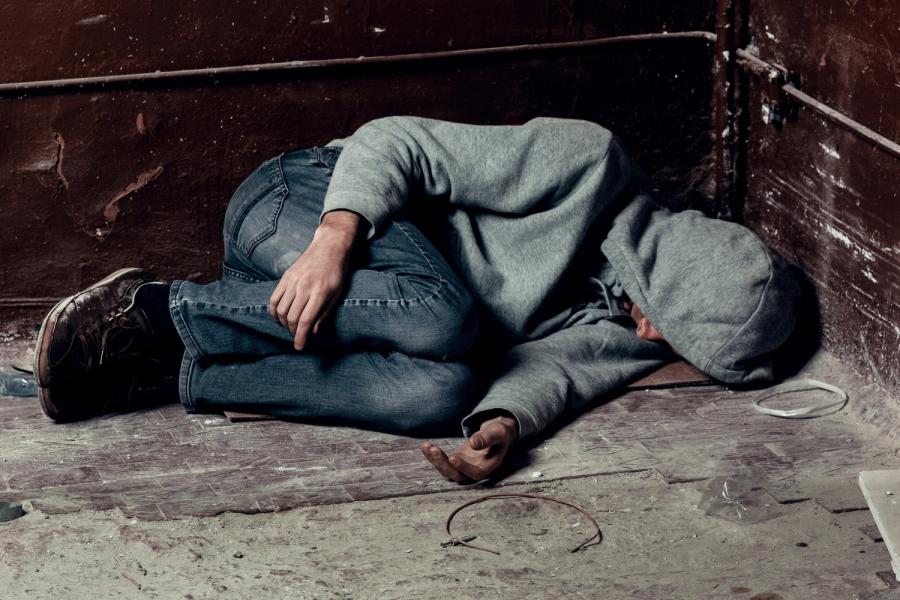
The label "Intentionally Homeless" is presented as a legal category, but in practice it functions as a moral indictment against families already overwhelmed by structural pressures.
It implies choice where there is no real choice, and agency where conditions have removed agency entirely.
1. The Term as a Weapon, Not an Assessment
The phrase "Intentionally Homeless" is framed as a legal category, but in practice it functions as a bureaucratic cudgel; a way for institutions to punish families for conditions the state itself manufactured.
It is a term that pathologises survival, criminalises desperation, and absolves the system of its own failures.
This is not neutral administrative language. It is institutional protection disguised as assessment.
2. How the Term Masks Structural Failure
A. It reframes state-engineered crises as personal failings
Families are pushed into homelessness by forces they did not choose:
Exploding rents created by deregulation and speculative markets.
Evictions triggered by landlord profit cycles not tenant behaviour.
Benefit delays and sanctions that destabilise households through administrative negligence.
Domestic abuse escape where leaving is an act of survival, not intention.
3. Local Authority Wrongdoing: The Patterns No One Admits
3.1 Misclassification as a Liability-Avoidance Strategy
Local authorities have repeatedly used the term to evade statutory duty:
Denying temporary accommodation by claiming a family "chose" to leave a property that was unsafe, mould-ridden, or overcrowded.
Blaming tenants for arrears caused by benefit delays; delays created by the same state now punishing them.
Penalising survivors of violence by arguing they "voluntarily left" their home.
Using trivial tenancy breaches as pretext to declare intentionality, even when the breach was provoked by landlord neglect.
This is not assessment. It is institutional self-preservation at the expense of human beings.
3.2 Bureaucratic Manipulation Disguised as Procedure
Authorities have been known to:
Ignore medical evidence proving a property was uninhabitable.
Overlook landlord misconduct to fast-track blame onto the tenant.
Apply the term inconsistently depending on budget pressure, not facts.
Use intentionality to thin housing lists rather than to reflect genuine behaviour.
4. The Human Cost of a Weaponised Label
4.1 Psychological Damage
The term inflicts:
State-engineered shame
Stigma that follows families across services
Emotional harm to children, who are punished for circumstances they never created
4.2 Material Damage
The classification can result in:
Immediate loss of temporary accommodation
Exclusion from social housing lists
Forced relocation far from support networks
Family separation in extreme cases
This is not governance. It is structural abandonment.
5. Where the Term Is Legitimate and Where It Ends
A narrow minority who deliberately and repeatedly cause severe neighbourhood harm may well fall within the definition.
But that is the limit.
It cannot be stretched to:
Reduce local authority liability
Punish families for poverty
Rewrite structural failures as personal choices
Deny humanitarian duty under the guise of "procedure"