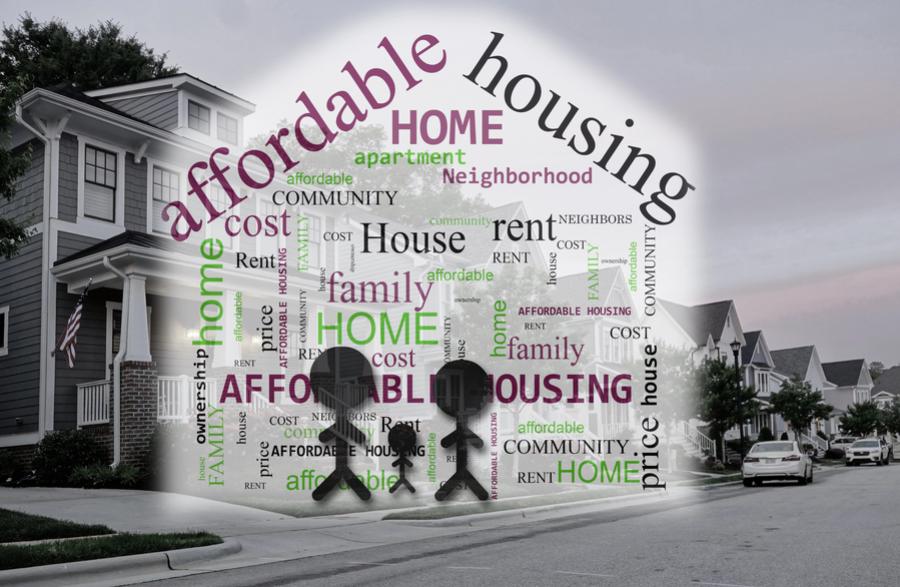
For decades, housing policy has been shaped by recycled models that promise stability but deliver little more than managed insecurity. Families are told to navigate systems that were never designed to help them build long-term financial resilience. The result is predictable: rising costs, limited access, and a generation locked out of opportunity.
The Process Accumulator Program (PAP) offers a fundamentally different approach; one that shifts the centre of gravity away from short-term fixes and toward a structural pathway for generational wealth creation.
Why Traditional Models Fail
Most social housing frameworks rely on centralised institutions, rigid eligibility criteria, and financial mechanisms that prioritise risk management over human development.
- Provide shelter but rarely provide security
- Offer tenancy but not trajectory
- Manage poverty rather than dismantling it
What Makes the Process Accumulator Program Different
The PAP is built on a simple but powerful principle: Wealth is created when people have stable foundations and a system that accumulates value on their behalf.
- Is decentralised — it does not rely on financial institutions that act as gatekeepers
- Is self-regulating — operating through an independent framework that removes unnecessary barriers
- Attaches real choice to the individual — not to bureaucratic processes
- Creates the conditions for generational wealth — from the moment a family enters the program
The PAP treats housing not as a commodity but as a platform for upward mobility. It ensures that the home is not just a place to live, but a mechanism that accumulates value over time; value that belongs to the family, not the system.
A Pathway Out of Poverty, Not a Management Strategy
The PAP is built on the opposite premise: that real progress requires stepping outside the old frameworks entirely.
- It does not trap families in cycles of dependency
- It does not rely on institutional permission
- It does not replicate the class-based assumptions embedded in traditional housing policy
A New Era of Economic Design
If we want a society where families can build stability, where both young and older people can plan for the future, and where opportunity is not rationed, then we must embrace models that operate beyond the limitations of the past.
The program is a time‑binding quantum strategy that draws the labour of the past into the present while simultaneously pulling a predilection of a future state and collapsing it into a lived reality (active operation). The PAP is that service model and the only model in operational existence at this sophisticated quantum level.
CLICK HERE for a detailed overview